Mars Hydro Reflector 96: Historical LED Fixture Profile
Historical technical reference — updated October 2026. This is an archive of the Mars Hydro Reflector 96 LED lighting fixture, not a current purchasing recommendation, new laboratory evaluation or operating guide. Product availability, warranty coverage and seller claims have not been independently reconfirmed. Historical photographs and existing site comparison modules are retained for documentation.
The archived Reflector 96 page described a rectangular LED fixture that was marketed as a compact alternative to older discharge-lighting equipment. Its original write-up presented strong first-person testing and product-ranking claims, including a purported spectral measurement made with a lux meter. That particular method cannot establish spectral coverage. This replacement keeps the historic model information while withdrawing the unsupported conclusions.
What the original model looked like
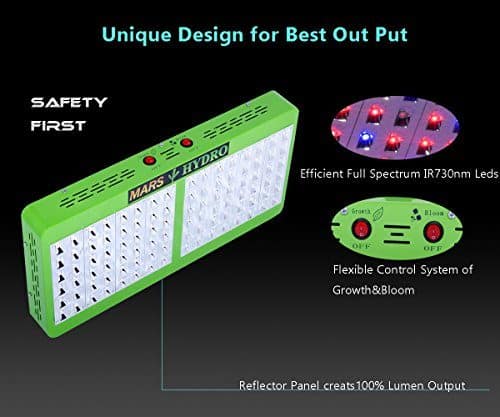
The product’s surviving photographs illustrate an enclosed LED assembly, a reflective optical surface and cooling equipment. Its “96” label belongs to the original manufacturer’s naming convention; it should not be read as an independently verified output metric. Earlier copy equated a fixture label with a high-intensity discharge lamp; that comparison would require side-by-side measurements rather than wattage shorthand.

Separating the model name from electrical input
A standard lux meter reports visible-light illuminance weighted to a human-eye response curve. It cannot resolve specific wavelengths and therefore cannot show that a fixture emits every wavelength between two spectral limits. A photon-flux meter measures a different quantity, and a spectrometer is necessary to substantiate detailed spectral composition. The previous page blurred these instruments and used that confusion to bolster a product claim; those statements have been superseded.
The US Department of Energy’s LED basics reference explains that luminous efficacy and complete-luminaire efficiency depend on drivers, optical design and operating conditions. A model name, LED chip count or marketing equivalence cannot, by itself, establish measured system output. For a meaningful comparison, the boundary of the measurement—bare package, assembled light source or complete fixture—must be made explicit.
Why the old comparison claims need qualifications
The original article also claimed results from prolonged personal operation and comparative testing, but no instrument calibration, measurement location, environmental conditions or raw records were preserved. This revision does not present those stories as independently validated tests. A photoset is valuable for documenting what the fixture looked like, not proving its intensity or reliability.
Historic coverage or intensity figures in sales material are not independently reproduced data. To establish an optical result, a test report would identify the exact hardware revision, measured electrical input, relevant optical metric, environmental conditions and how measurements were taken. Without that information, precise-looking numbers can be misleading. The absence of traceable data is a reason to withhold judgment, not a reason to assume performance was poor.
Cooling and component reliability
Archival illustrations show cooling hardware and reflector-style framing. Airflow through a powered luminaire helps remove heat from components; the presence of a fan is not a guarantee of adequate cooling. Fan bearings, drivers and wiring can age, while the LED packages may continue to operate. A historical safety description cannot certify an individual piece of used equipment.
The Department of Energy’s LED luminaire lifetime guidance distinguishes gradual changes in light output from failure of the electronics and other components. A manufacturer’s rated lifetime does not guarantee that every part of a fixture will function for that many hours. Even a historically well-regarded enclosure can suffer faults as components age.
What the surviving archive can and cannot tell us
This product is an example of the older reflector-panel era, when many designs used compact point-source diodes and relatively elaborate marketing claims about “bands” of emitted light. The evolution toward integrated LED boards changed enclosure appearance, but a newer format is not automatically better without full-fixture measurements.
The images and original listing descriptions can help identify the general form factor, control arrangement and manufacturer’s contemporary messaging. They cannot establish today’s electrical safety, remaining service life, exact spectral output or the condition of a specific second-hand device. This distinction is particularly important when an old product page continues to rank in search engines long after its first publication.
Reading old specification sheets correctly
What does wattage mean here?
Electrical input watts measure power consumed by the complete device when defined correctly. Nominal LED package ratings and replacement-equivalency claims refer to different concepts. A meaningful comparison requires verified input-power figures for the complete fixtures being evaluated.
Does “full spectrum” guarantee a measured spectrum?
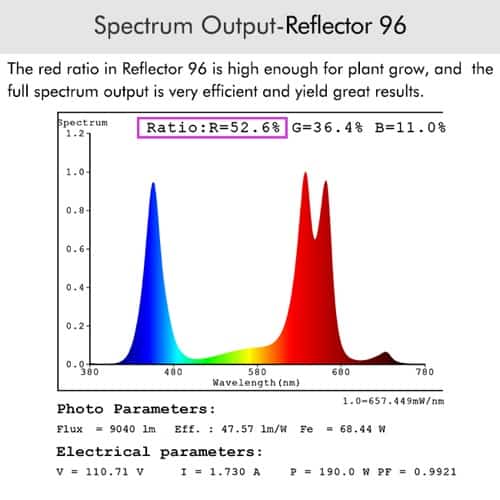
No. That phrase can be a marketing descriptor. A spectral graph without a defined instrument, measurement conditions and product revision is insufficient for independent verification. A lux meter measures illuminance for human vision; a spectrometer is used to characterize a light source’s spectral distribution.
Does a fan make a light fixture heat-free?
No. A fan is part of the heat-management system, not proof that the housing, driver or other components will remain cool. Damaged wiring, impaired airflow or aging electronics can introduce additional hazards.
Can the older product warranty be relied on?
Not without confirmation from the relevant manufacturer or seller. Warranty terms, support availability, production revisions and spare parts can change, and this archive is not a current terms-of-sale statement.
Archived comparison module
The following previously configured AzlinkPRO table is retained as part of the original site’s historical content. Its entries are not independently verified here, and it should not be interpreted as a recommendation or certification of current availability.
Compare the key features, then see current product details and pricing on Amazon.


As an Amazon Associate, we may earn a small commission from qualifying purchases.
Why a lux-meter claim cannot verify the Reflector 96 spectrum
The original Mars Hydro Reflector 96 review referred to a lux-meter observation as if it measured the lamp’s spectral characteristics. A lux sensor reports brightness weighted for human vision; it does not resolve the emitted wavelengths. A spectral claim would require appropriate spectral measurements, and the archived material does not contain that underlying record.
The surviving enclosure and reflector images do help identify the older product family. They do not validate the stated replacement ratio against high-intensity discharge lighting, which would require comparable output measurements and documented electrical input rather than only a model number or photo.
Further reading and sources
For another model from the same historical family, see the Mars Hydro Reflector 192 technical archive. Learn about the difference between illuminance and related measurements in our light-meter guide, and compare basic lamp technologies in LED versus HPS lighting. For fixture-level test considerations, consult the DOE’s lighting performance guidance.
Editorial transparency: The archived Mars Hydro Reflector 96 page has been rewritten using documented fixture concepts and authoritative lighting references. We are not claiming new first-hand tests, recent product ownership, current retailer availability or verified comparative rankings.