VIPARSPECTRA V600: Legacy Reflector-Series Lighting Archive
Historical technical archive, October 2026. This reference documents the legacy VIPARSPECTRA V600 lighting device. It is not a current product test, sales recommendation or operating tutorial. Older feature claims, performance statements, warranties and merchant listings may no longer reflect the available hardware.
The VIPARSPECTRA V600 was presented as a larger reflector-style companion to the V300. Its historic review included promotional statements about thermal management, a specific lamp-equivalency number and first-person impressions that were not accompanied by the underlying instrument readings. The article is now a historical technical profile rather than a present-day recommendation.
Model design and identifying features
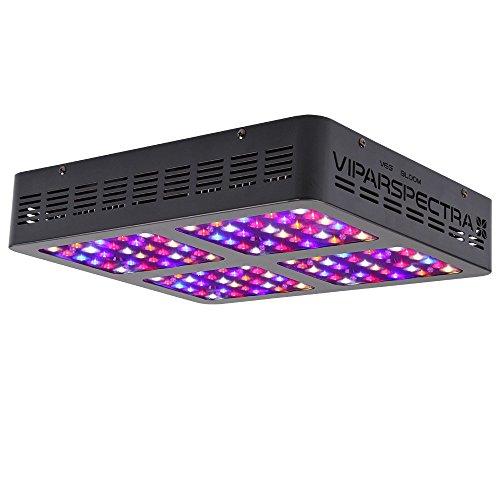
The original images indicate an enclosed, actively cooled fixture with a larger discrete-emitter array than the V300. That helps distinguish its physical identity, but emitter quantity is not a power meter. Its manufacturer-era wording listed nominal chip ratings, an approximate electrical draw and cooling fans. These are archival descriptions, not new independently measured specifications.
What the original wattage and spectrum claims meant
The older page conflated the model label, reported wall consumption and a claimed replacement for a different light technology. Those three quantities serve different purposes. A watt input claim cannot validate a lamp-replacement statement without controlled optical comparisons and equal operating conditions. A spectral plot can describe wavelength weighting, but not an instrument-verified fixture comparison unless the method is disclosed.
For the VIPARSPECTRA V600, the Department of Energy’s LED guidance helps distinguish its historical reflector-panel label from complete-fixture electrical consumption. Driver and optical losses affect the finished unit, so the V600 designation and an LED chip count cannot replace a measured wattage or efficiency report.
Reassessing the original promotional comparisons
The previous text described LEDs as “70% cooler,” offered an unverified temperature observation and asserted that a particular electrical configuration would remain safe. Thermal behavior depends on construction and operating conditions; old marketing cannot establish cooling performance of a unit in service today. Likewise, a manufacturer warranty should not be treated as currently enforceable without verifying its terms.
A valid V600-to-V300 comparison would identify the two exact fixture versions, document complete-device power and use the same optical test method for both. The older reflector-series page did not preserve those measurements, so its size and lamp-equivalency comparisons remain historical claims rather than verified findings.
Thermal behavior and electronic reliability
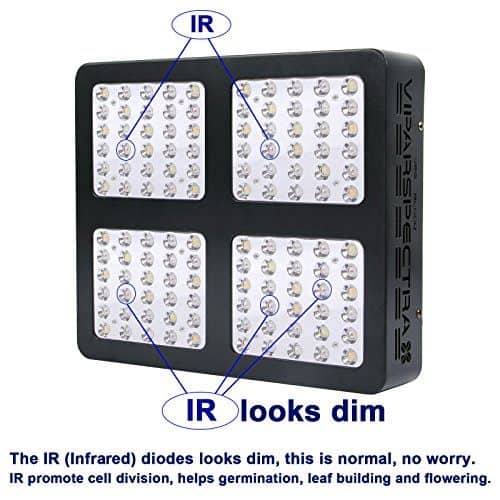
The V600 enclosure used active cooling as part of an integrated light-emitting system. Fans, connectors, drivers and LED arrays have different aging mechanisms. A functional-looking fan does not guarantee that internal electrical components are safe, and a relatively cool light-emitting face does not mean the rear housing lacks hot surfaces.
The DOE LED lifetime guidance explains why gradual light-output depreciation and system failures must be evaluated separately. The driver, LED packages, cooling components and connectors do not necessarily share the same service life. A fixture can cease functioning because of its electronics even when individual light-emitting diodes are intact.
Why older equipment pages can be misleading
V600 exemplifies an older reflector-panel approach: a substantial housing, multiple point sources and retailer descriptions built around nominal watt categories. Replacing a promotional comparison with a model-specific archive helps preserve technology history without suggesting the original ranking is still current.
A V600 photograph documents its earlier reflector-style housing, visible LED array and cooling arrangement. It is not a contemporary inspection of a particular device: the state of its fans, driver, insulation or original support arrangements cannot be determined from a historic listing image.
Technical glossary
Input power versus model name
The V600 was positioned above the V300 in VIPARSPECTRA’s old reflector-series range. The larger model number and its expanded LED array should not be read as a laboratory measurement of input power or a fixed performance multiplier over the V300. Any reliable comparison would need wall-power readings from identified revisions of both fixtures and output measurements made under equivalent conditions.
Optical output and spectrum
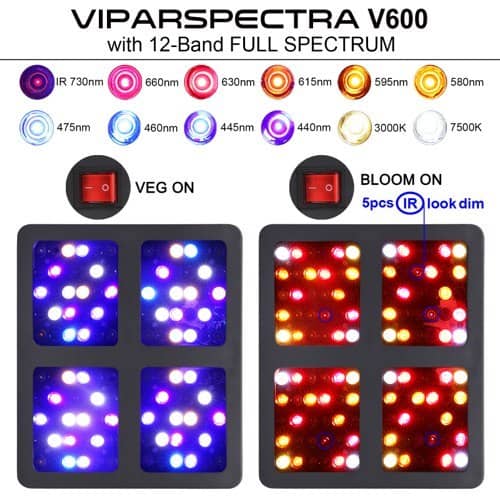
Luminous flux describes visible output weighted to human vision, while a spectral power distribution shows energy by wavelength. A colour image or a spectral marketing graph is not itself a calibrated report. The evidence needed depends on the type of output being claimed.
Cooling, drivers and lifetime
The V600’s reflector-style housing combined LED packages with active cooling. The position and condition of its fans matter when interpreting an old photograph, but a pictured fan says nothing about its present condition. In a surviving fixture, electrical driver aging and cooling-system deterioration are distinct from the advertised longevity of the LED packages.
Historic warranties
Warranty promises are tied to terms and dates. This archive does not verify current manufacturer support, replacement parts, continued availability or any old retailer’s return policy.
Existing historical comparison display
The older AzlinkPRO display is retained as part of the website archive. Its listings are not independently revalidated here. It is not a certification of current product specifications or suitability.
Imported: viparspectra
Compare the key features, then see current product details and pricing on Amazon.


As an Amazon Associate, we may earn a small commission from qualifying purchases.
Sources and related eStageCraft references
See our VIPARSPECTRA V300 reference for a second model in this equipment family. Our LED versus HPS lighting article explains broader technology differences, and the light-meter reference clarifies the meaning of different optical units. The DOE’s whole-fixture guidance provides independent context on comparing lighting systems.
Editorial transparency: This article documents the historical VIPARSPECTRA V600 design using archival site assets and independent lighting-technology references. No recent first-hand product tests, laboratory results, seller verification or specific performance guarantees are asserted.