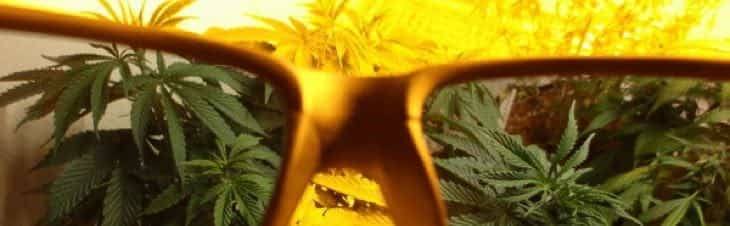
Protective Eyewear for Bright Indoor Lighting: UV and Safety
Strong indoor lighting can create uncomfortable glare, and some specialized light sources emit ultraviolet (UV) radiation. Protective eyewear can reduce certain exposures, but a dark lens, coloured filter or “UV400” listing does not automatically make a pair of glasses suitable for every lighting or impact hazard.
This refreshed guide explains what eyewear markings mean, how UV protection differs from glare reduction and impact resistance, and why checking the actual light source is more important than choosing glasses by colour. It focuses on general eye safety in brightly lit indoor work and display environments. No eyewear in this article has been independently tested by eStageCraft.
Three different protection questions
- UV protection: Does the lens have a verified rating for the ultraviolet wavelengths relevant to the exposure?
- Visible-light attenuation and glare: Does the lens reduce excessive brightness without preventing safe visibility and colour recognition?
- Physical impact protection: Does the frame and lens meet an applicable impact standard for the job being performed?
These three properties are not interchangeable. A tinted fashion lens may reduce perceived brightness without providing suitable impact protection. Conversely, clear protective glasses can meet a recognized impact standard and may also have documented UV filtering.
What is ultraviolet light?
Ultraviolet radiation lies outside the visible violet end of the electromagnetic spectrum. It is commonly grouped into UVA, UVB and UVC bands. Exposure depends on the light source, distance, duration and shielding. Sunlight and certain specialized artificial sources can create hazards, but not all ordinary white LED lamps emit meaningful UV.
Eye-safety guidance from the National Eye Institute and the National Eye Institute eye-health guidance emphasizes suitable UV filtering for relevant exposure. When a workplace uses specialized UV equipment, follow that equipment’s hazard assessment and operator instructions rather than assuming generic tinted glasses are enough.

UV400, ANSI Z87.1 and other labels: what they do and do not prove
UV400 and UV-blocking language
“UV400” commonly indicates filtering of ultraviolet wavelengths up to approximately 400 nm, but a label by itself is not independent proof of measured performance. Look for manufacturer documentation identifying the filter properties and intended uses. Protective eyewear must be appropriate to the spectrum and intensity of the actual source.
ANSI/ISEA Z87.1
In the United States, ANSI/ISEA Z87.1 markings indicate eye and face protection designed for specified occupational or physical hazards. Not every impact-rated lens is suitable for every UV source. Different markings can indicate impact protection or filter properties; verify the manufacturer’s specific standard and marking rather than treating “Z87” as a universal light-safety guarantee.
The CDC/NIOSH guidance on protective eyewear describes how protective glasses differ from ordinary prescription frames. For workplace optical hazards, OSHA’s eye protection guidance distinguishes protection from impact, UV, laser radiation and electric arcs.
Lens colour and optical density
Blue, green, gray and amber lenses can change how lighting looks, but colour alone does not establish protection. Optical density, visible light transmission and verified spectral transmission curves are more informative when the light source poses a specialized exposure risk. For lasers, welding or high-energy UV equipment, task-specific certified protection is essential.
Bright white LEDs versus specialized UV sources
Ordinary visible-light LEDs and equipment intentionally designed to emit UVA, UVB or UVC are different products with different hazards. The presence of the word “LED” does not tell you whether a light is safe to stare into, nor does it imply that a particular pair of tinted glasses will protect against all wavelengths.
Avoid staring directly at intense light sources. Reduce unnecessary direct exposure, keep installed shields intact and follow the manufacturer’s safety instructions. Equipment employing germicidal UVC, lasers, welding arcs or other specialized optical hazards may require dedicated protection and controls that are outside the scope of consumer tinted glasses.
What to check before relying on protective eyewear
- Identify the hazard first. Determine whether it is glare, UV, impact, heat or a specialized optical source.
- Read the actual rating. Verify the lens and frame markings, manufacturer documentation and intended application.
- Consider side protection. A suitable lens cannot protect against exposures that bypass the lens from the sides or around the frame.
- Keep vision usable. Strong tint can make obstacles, steps and colour-coded warnings harder to see.
- Inspect condition. Scratches, cracked frames, damaged coatings and poor fit can undermine eyewear performance.
- Do not substitute fashion glasses. Ordinary tinted eyewear is not a replacement for equipment-specific certified protection.
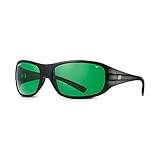
Legacy product comparison: read specifications carefully
The existing comparison table below is retained from the original article. Its eyewear models and marketplace listings may have changed or been discontinued since the initial publication. We have not independently verified UV transmission curves, impact certification, current availability or model-specific protection. Do not treat a listing’s marketing description as a safety assessment, and do not select protective eyewear for a hazardous light source on this table alone.
Compare the key features, then see current product details and pricing on Amazon.



As an Amazon Associate, we may earn a small commission from qualifying purchases.
Common questions about bright-light eyewear
Will tinted glasses always block UV?
No. Lens colour and darkness mainly affect visible light appearance. UV filtering must be documented for the exact lens and should match the relevant exposure.
Do LED lights automatically require UV-filtering eyewear?
No. LED is a broad technology category. Many ordinary white-light LEDs are not significant UV emitters. Evaluate the source and exposure rather than assuming identical risks for all LEDs.
Is ANSI Z87.1 the same as UV400?
No. ANSI/ISEA Z87.1 addresses protective eyewear requirements and markings across specific hazards. UV400 is a commonly used ultraviolet-filter designation. Neither label substitutes for a complete assessment of an unusual optical hazard.
Are ordinary sunglasses suitable for industrial UV equipment or lasers?
Not by default. Specialized equipment can require specifically rated eye protection, controlled access, shielding and trained operation. Follow equipment-specific professional safety guidance.
Can a very dark lens create new problems?
Yes. Excessive tint can reduce visibility and the ability to notice obstacles or warning lights. The appropriate filter depends on the task and the illumination level.
Final thoughts
When evaluating eyewear for bright indoor environments, begin with the actual exposure. Check UV transmission documentation where relevant, verify impact or occupational markings for physical hazards, and don’t mistake coloured lenses for universal safety equipment.
For more background about fixture technology, see our LED versus HPS lighting comparison. For measurement terminology, our light-meter guide explains the distinction between illuminance and photon-based measurements.
Editorial update: October 2026. This article has been rewritten as a general eye-safety explainer using guidance from professional eye-care organizations and occupational-safety resources. The historical product table is retained for reference but is not an independently tested product ranking.