GalaxyHydro 300W: Historical LED Fixture Reference
The GalaxyHydro 300W is preserved here as a historical lighting-equipment reference, not a contemporary performance test, operating tutorial or product recommendation. The original article was written during an earlier generation of LED fixtures and contained manufacturer-style promotional statements. This revision separates observable enclosure features from claims that would require calibrated measurements, current support documents and an identified production revision.
What the archival material actually describes
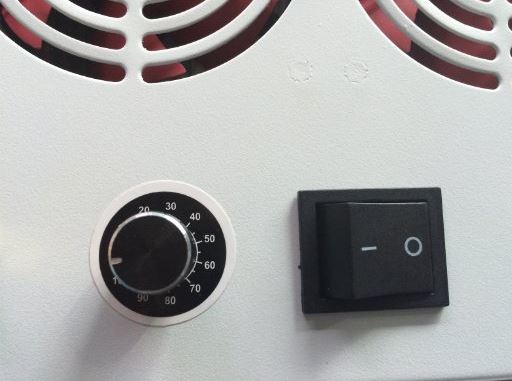
A rotary control and separate power switch were the most visible user-interface elements in the original images. These distinguish the front-panel appearance from fixtures with only a fixed on/off control.
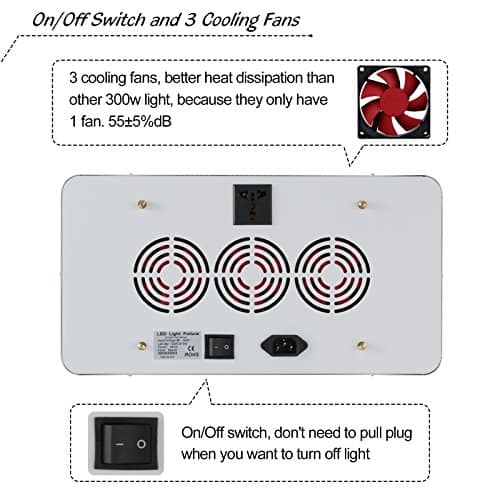
The archived enclosure images show an actively cooled housing. A fan-assisted case is a system with mechanical parts, not merely a collection of light-emitting diodes.
Design details that matter to historical identification
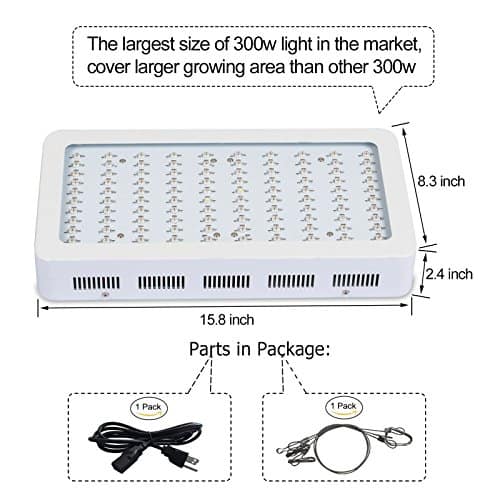
Old materials attributed the design to a multi-colour emitter array. The listed number of LED packages and the nominal chip rating were product-description attributes, not an independently verified wall-power measurement.
The model illustrates why an inexpensive-looking, compact LED enclosure can still involve several independent failure points. The front control can operate correctly while output drifts; a fan can spin even when cooling paths are obstructed; and the case may become warm even when the light-facing surface seems comparatively cool. None of those observations is a diagnosis of this specific unit. They simply explain why its original advertising description should not be treated as a current condition report.
Separating specifications from advertising
The model name includes “300W.” The archived page separately gave a substantially lower typical input-power claim. Because the source is a historical product description, neither number is a present-day laboratory finding or proof of equivalence to a different lamp technology.
The old copy suggested that several fixtures could be linked without risk of overloading an electrical circuit. That statement was already corrected: circuit and interconnect ratings must never be inferred from a claimed individual wattage.
The US Department of Energy’s technical guidance on reporting LED luminaire performance distinguishes measurements made on a complete fixture from nominal ratings of individual components. Driver efficiency, operating temperature and optical design all affect the result. A nominal chip rating is therefore not the same as verified total input power.
Lifetime, maintenance and ownership claims
The article formerly treated claimed warranties and lifetime hours as a guarantee of reliability. Warranty coverage depends on the seller, jurisdiction, date and terms; rated diode life does not establish the life of the driver or fans.
The DOE’s recommendations for LED luminaire lifetime reporting separate the light-emitting elements from drivers, cooling systems and other components. Historical lifetime estimates do not prove that a particular older unit works or remains safe today. Changing optical performance over time is also different from sudden failure of an electronic component.
What the historical record does not establish
This article does not establish current inventory, pricing, the operation of a particular surviving example, or the status of old warranty commitments. The images are preserved documentation from earlier versions of eStageCraft. They are not first-hand measurements carried out for this 2026 update. Likewise, any preserved comparison module below is historical content and should not be interpreted as an independently verified current ranking.
Electrical and optical safety
Electrical lighting hardware can present a risk if its insulation, fan assembly, power supply or enclosure is damaged. Apparent brightness, an intact exterior and a low advertised input rating do not establish operational safety. Do not defeat protective guards, bypass connectors or improvise electrical repairs. Where specialized light sources or electronics require service, rely on qualified personnel and original manufacturer documentation.
Visible brightness and light source safety are also separate considerations. An unusually intense source may create glare without emitting meaningful ultraviolet radiation, whereas a dedicated UV source presents different hazards. The distinction is described in our general protective-eyewear and UV overview.
Historical table and additional context
The legacy AzlinkPRO table, when present, is retained as part of the website archive. Product listings, linked images, merchant status and warranty statements have not been reverified. This page does not endorse a seller or suggest that the listed devices remain appropriate for any specific purpose.
Frequently asked questions
Is the number in the model name a certified wall-power measurement?
Not by itself. Model names may incorporate the manufacturer’s marketing conventions. A watt value on a page needs a defined measurement point, device revision and test conditions to support an electrical comparison.
Can an old product photograph establish its present condition?
No. Photos can document the exterior design, controls, labels and some enclosure features. They cannot establish the internal condition of a driver, a fan bearing, insulation or optical components today.
Can a long LED lifespan claim guarantee the entire fixture?
No. The LED array and surrounding components have different failure modes. Thermal stress, aging electronics and mechanical wear cannot be ruled out by a diode-level estimate.
Reading the GalaxyHydro 300W archive
The GalaxyHydro 300W label identifies a historical product, not an independently established 300-watt wall reading. The surviving text itself distinguished nominal device ratings from a lower reported electrical input. Without a dated measurement of the complete fixture, neither figure should be converted into an exact efficiency or lamp-equivalency claim.
Another older statement suggested that multiple units could be connected without overloading a circuit. That assurance is not supportable from a single device’s advertised consumption: connector ratings, complete-system loading and the original manufacturer’s instructions are separate issues. This article preserves that warning rather than repeating the old promise.
Related technical reading
For another historical record, see LED and HPS lighting fundamentals. To understand why wattage, lumens, illuminance and spectrum should not be confused, read our general light-meter guide.
Editorial update (October 2026): GalaxyHydro 300W is presented as archival technology history. The text does not claim new laboratory testing, current first-hand ownership, safety certification or independently verified marketplace terms.