VIPARSPECTRA V300: Historical Reflector-Series Profile
Historical technical reference — updated October 2026. This is an archive of the VIPARSPECTRA V300 LED lighting fixture, not a current purchasing recommendation, new laboratory evaluation or operating guide. Product availability, warranty coverage and seller claims have not been independently reconfirmed. Historical photographs and existing site comparison modules are retained for documentation.
The V300 is an earlier VIPARSPECTRA reflector-series model. The original page highlighted its size, nominal diode ratings, reflective enclosure and active cooling, but it also offered sweeping product recommendations and biological claims that the published record could not substantiate. This revision is a technical history of the older light fixture, not a current comparison ranking.
What the original model looked like
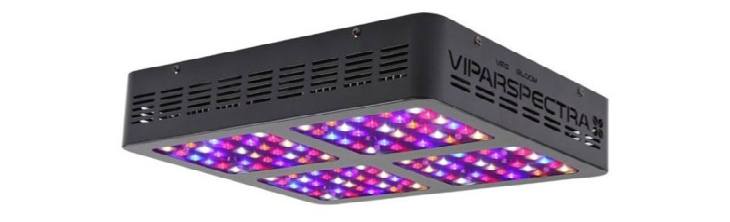
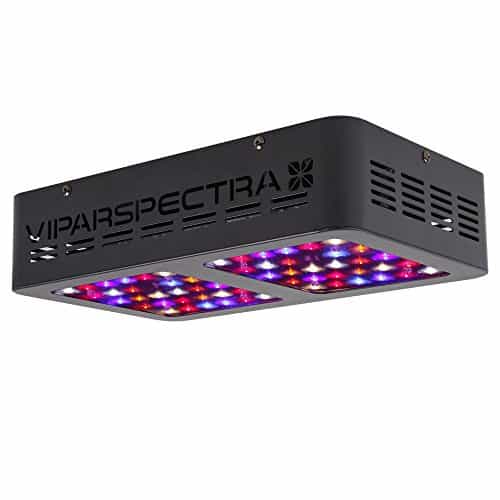
Archival materials depicted a relatively compact casing with a reflective interior and a fan. The name “V300” should be read as a model identifier, not a calibrated statement of complete-system power draw. Historical specifications reported a lower electrical input than the headline model number, illustrating the importance of separating labels from measured input.
Separating the model name from electrical input
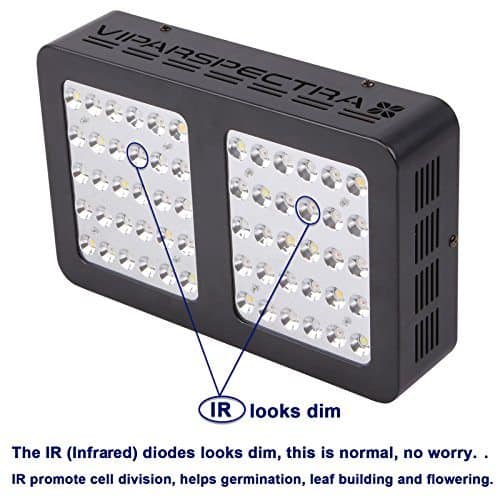
The page previously described a multi-band output and colour bias using a product illustration. Such graphics can convey the intended colour arrangement but cannot establish measured light output or prove equivalence to another fixture. A spectral power distribution is a different test from a lux reading. Any cross-model comparison needs the relevant test instruments and complete methods.
The US Department of Energy’s LED basics reference explains that luminous efficacy and complete-luminaire efficiency depend on drivers, optical design and operating conditions. A model name, LED chip count or marketing equivalence cannot, by itself, establish measured system output. For a meaningful comparison, the boundary of the measurement—bare package, assembled light source or complete fixture—must be made explicit.
Why the old comparison claims need qualifications
Old statements promised low running temperatures and large operational benefits. The power supply and heat sink can still become hot even if the light-emitting face feels cooler than a discharge lamp. No claim about lifetime cost, suitability or operating condition can be verified from a historic retailer listing.
Historic coverage or intensity figures in sales material are not independently reproduced data. To establish an optical result, a test report would identify the exact hardware revision, measured electrical input, relevant optical metric, environmental conditions and how measurements were taken. Without that information, precise-looking numbers can be misleading. The absence of traceable data is a reason to withhold judgment, not a reason to assume performance was poor.
Cooling and component reliability
The archived V300 shows why light fixtures should be evaluated as integrated systems. A fan, electronic driver and emitter array have distinct lifetimes; an undamaged-looking optical face does not reveal the health of the driver or a fan bearing. Changes in light colour and output can occur before complete component failure.
The Department of Energy’s LED luminaire lifetime guidance distinguishes gradual changes in light output from failure of the electronics and other components. A manufacturer’s rated lifetime does not guarantee that every part of a fixture will function for that many hours. Even a historically well-regarded enclosure can suffer faults as components age.
What the surviving archive can and cannot tell us
The reflector-series design belongs to an era when discrete LED package boards and small cooling fans were common visual signatures. The useful historical question is how the product was constructed and marketed—not whether its older ranking remains valid.
The images and original listing descriptions can help identify the general form factor, control arrangement and manufacturer’s contemporary messaging. They cannot establish today’s electrical safety, remaining service life, exact spectral output or the condition of a specific second-hand device. This distinction is particularly important when an old product page continues to rank in search engines long after its first publication.

Reading old specification sheets correctly
What does wattage mean here?
Electrical input watts measure power consumed by the complete device when defined correctly. Nominal LED package ratings and replacement-equivalency claims refer to different concepts. A meaningful comparison requires verified input-power figures for the complete fixtures being evaluated.
Does “full spectrum” guarantee a measured spectrum?
No. That phrase can be a marketing descriptor. A spectral graph without a defined instrument, measurement conditions and product revision is insufficient for independent verification. A lux meter measures illuminance for human vision; a spectrometer is used to characterize a light source’s spectral distribution.
Does a fan make a light fixture heat-free?
No. A fan is part of the heat-management system, not proof that the housing, driver or other components will remain cool. Damaged wiring, impaired airflow or aging electronics can introduce additional hazards.
Can the older product warranty be relied on?
Not without confirmation from the relevant manufacturer or seller. Warranty terms, support availability, production revisions and spare parts can change, and this archive is not a current terms-of-sale statement.
Archived comparison module
The following previously configured AzlinkPRO table is retained as part of the original site’s historical content. Its entries are not independently verified here, and it should not be interpreted as a recommendation or certification of current availability.
Imported: viparspectra
Compare the key features, then see current product details and pricing on Amazon.



As an Amazon Associate, we may earn a small commission from qualifying purchases.
What can be learned from the VIPARSPECTRA V300 archive
The V300 represents an earlier VIPARSPECTRA reflector-series fixture with discrete LED packages, a reflector-style enclosure and active cooling. Its old product photography is useful for identifying this design language, but the number in the model name is not a record of power drawn at the wall or a calibrated optical reading.
Archived colour-band graphics and descriptions of a multi-band spectrum cannot establish measured spectral output. They should be read as marketing-era illustrations. In particular, the V300’s relationship to the larger V600 does not establish a fixed ratio of brightness, efficiency or service life between the two devices.
Further reading and sources
For another model from the same historical family, see the VIPARSPECTRA V600 technical archive. Learn about the difference between illuminance and related measurements in our light-meter guide, and compare basic lamp technologies in LED versus HPS lighting. For fixture-level test considerations, consult the DOE’s lighting performance guidance.
Editorial transparency: The archived VIPARSPECTRA V300 page has been rewritten using documented fixture concepts and authoritative lighting references. We are not claiming new first-hand tests, recent product ownership, current retailer availability or verified comparative rankings.