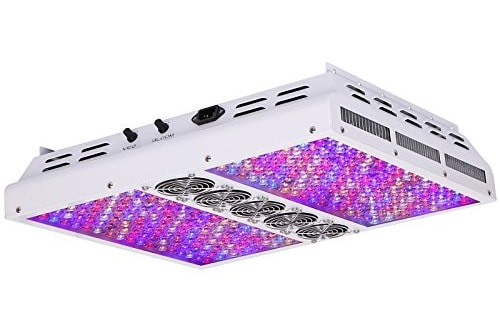
Black Dog PhytoMAX-2: Historical Product-Line Archive
The Black Dog LED PhytoMAX-2 lineup is preserved here as a historical lighting-equipment reference, not a contemporary performance test, operating tutorial or product recommendation. The original article was written during an earlier generation of LED fixtures and contained manufacturer-style promotional statements. This revision separates observable enclosure features from claims that would require calibrated measurements, current support documents and an identified production revision.
What the archival material actually describes
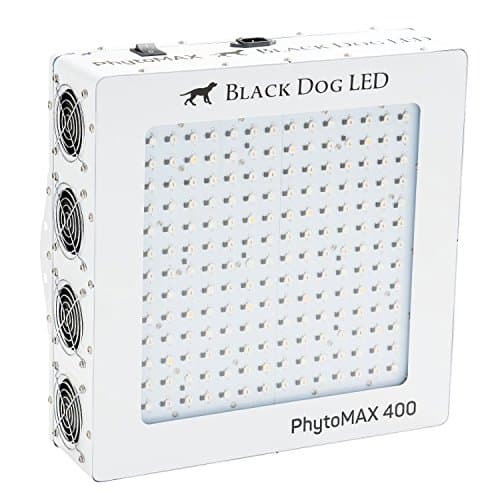
The original article covered a family of PhytoMAX-2 products rather than one single piece of equipment. That distinction matters: photographs and specifications from one family member should not automatically be applied to another.
Historic source materials described multiple model-number tiers and linked them to different enclosures. Numbered tiers are a useful way to identify archival references, but the number should not be assumed to equal the assembled fixture’s measured electrical draw.

Design details that matter to historical identification
The page includes spectral and footprint-style graphics originating from the historical product discussion. They are illustrations of old claims, not independently reproduced radiometric tests.
The most useful historical feature of this page is the documentation of how product families were marketed. Names like “200,” “400,” “600” and “1000” create a strong impression of an ordered power ladder, but meaningful technical comparison requires complete fixture specifications and independently described test conditions. A photograph of a chart is only an illustration. A proper record would preserve the measurement date, model revision, optical measurement method and any calibration certificate. This article now distinguishes those primary-source claims from facts that can be verified independently.

Separating specifications from advertising
The original piece described the lineup as the best in its industry and asserted that its combination of spectral output and power was scientifically superior. This archive does not have independently reproducible evidence for those judgments.
Spectral charts can use different axes, calibration methods or smoothing approaches. Without the original instrument data and test conditions, charts cannot establish cross-brand rankings.
The US Department of Energy’s technical guidance on reporting LED luminaire performance distinguishes measurements made on a complete fixture from nominal ratings of individual components. Driver efficiency, operating temperature and optical design all affect the result. A nominal chip rating is therefore not the same as verified total input power.
Lifetime, maintenance and ownership claims
The old article made time-sensitive claims about return guarantees, warranty terms and availability. No present-day availability or coverage is implied by a surviving post.
The DOE’s recommendations for LED luminaire lifetime reporting separate the light-emitting elements from drivers, cooling systems and other components. Historical lifetime estimates do not prove that a particular older unit works or remains safe today. Changing optical performance over time is also different from sudden failure of an electronic component.
What the historical record does not establish
This article does not establish current inventory, pricing, the operation of a particular surviving example, or the status of old warranty commitments. The images are preserved documentation from earlier versions of eStageCraft. They are not first-hand measurements carried out for this 2026 update. Likewise, any preserved comparison module below is historical content and should not be interpreted as an independently verified current ranking.
Electrical and optical safety
Electrical lighting hardware can present a risk if its insulation, fan assembly, power supply or enclosure is damaged. Apparent brightness, an intact exterior and a low advertised input rating do not establish operational safety. Do not defeat protective guards, bypass connectors or improvise electrical repairs. Where specialized light sources or electronics require service, rely on qualified personnel and original manufacturer documentation.
Visible brightness and light source safety are also separate considerations. An unusually intense source may create glare without emitting meaningful ultraviolet radiation, whereas a dedicated UV source presents different hazards. The distinction is described in our general protective-eyewear and UV overview.
Historical table and additional context
The legacy AzlinkPRO table, when present, is retained as part of the website archive. Product listings, linked images, merchant status and warranty statements have not been reverified. This page does not endorse a seller or suggest that the listed devices remain appropriate for any specific purpose.
Compare the key features, then see current product details and pricing on Amazon.


As an Amazon Associate, we may earn a small commission from qualifying purchases.
Frequently asked questions
Is the number in the model name a certified wall-power measurement?
Not by itself. Model names may incorporate the manufacturer’s marketing conventions. A watt value on a page needs a defined measurement point, device revision and test conditions to support an electrical comparison.
Can an old product photograph establish its present condition?
No. Photos can document the exterior design, controls, labels and some enclosure features. They cannot establish the internal condition of a driver, a fan bearing, insulation or optical components today.
Can a long LED lifespan claim guarantee the entire fixture?
No. The LED array and surrounding components have different failure modes. Thermal stress, aging electronics and mechanical wear cannot be ruled out by a diode-level estimate.
Why the PhytoMAX-2 family needs model-by-model evidence
The Black Dog PhytoMAX-2 page covered several related fixtures, not one standardized unit. Numbered models such as 200, 400, 600 and 1000 were discussed together, but it would be misleading to attach one photograph, claimed electrical figure or spectral diagram to every member of that family without identifying the model and document revision.
The remaining wavelength and coverage graphics show what was circulated in earlier product literature. They are useful archival artifacts, but an image of a chart does not identify the sensor calibration, measurement geometry or independent laboratory responsible for its figures. Historical claims of industry-leading output should therefore remain explicitly unverified.
Related technical reading
For another historical record, see lighting measurement terminology. To understand why wattage, lumens, illuminance and spectrum should not be confused, read our general light-meter guide.
Editorial update (October 2026): Black Dog LED PhytoMAX-2 lineup is presented as archival technology history. The text does not claim new laboratory testing, current first-hand ownership, safety certification or independently verified marketplace terms.