KIND LED K5 XL750: Legacy Lighting Controls Archive
The KIND LED K5 XL750 is preserved here as a historical lighting-equipment reference, not a contemporary performance test, operating tutorial or product recommendation. The original article was written during an earlier generation of LED fixtures and contained manufacturer-style promotional statements. This revision separates observable enclosure features from claims that would require calibrated measurements, current support documents and an identified production revision.
What the archival material actually describes
Unlike the simpler fixed-output panels featured elsewhere in the archive, the K5 XL750 was advertised with multiple independent colour channels and a programmable electronic control system.
The historical article described remote control, a built-in timer and adjustable light output. Those are examples of integrated user-interface design; they do not establish that a surviving remote, display or controller still functions.
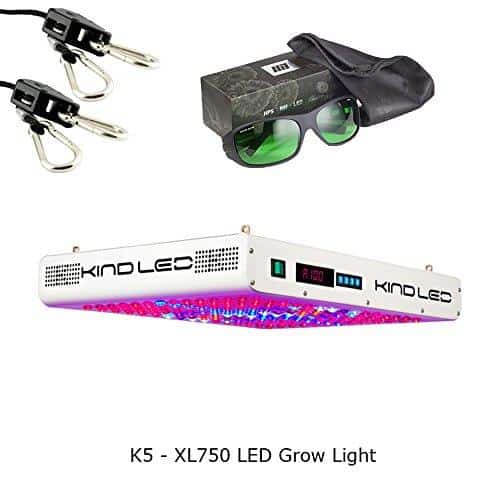
Design details that matter to historical identification
The old specification described a combination of nominally rated LED chips rather than one uniform component group. A component-count calculation is not a substitute for the electrical input of the complete assembled product.
The defining characteristic of this archived model is its electronics-heavy architecture. Having several controls built into one housing changed the relationship between the optical emitter, the driver circuitry and the operator interface. Historical photographs demonstrate its external arrangement, but they are not schematics and cannot establish electrical protection, board revisions or software reliability. A modern engineering evaluation would examine the complete enclosure rather than treating the advertised control features as proof of a better fixture.
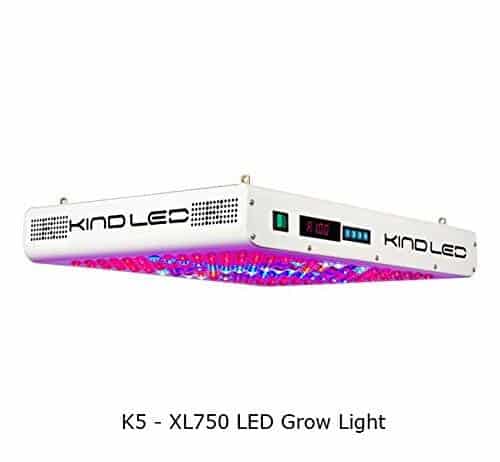
Separating specifications from advertising
The article made incompatible-sounding equivalency claims, including comparison to a much higher-rated high-intensity discharge lamp. Such shorthand does not establish the same spectral output, optical distribution or electrical consumption.
An integrated timer is not necessarily a maintenance-free convenience. As products age, built-in electronics can become harder to repair than external controls, and discontinued remotes can be difficult to identify.
The US Department of Energy’s technical guidance on reporting LED luminaire performance distinguishes measurements made on a complete fixture from nominal ratings of individual components. Driver efficiency, operating temperature and optical design all affect the result. A nominal chip rating is therefore not the same as verified total input power.
Lifetime, maintenance and ownership claims
The original three-year warranty and return-policy statements were written at the time of publication. They should not be treated as active terms for any present-day transaction or repair.
The DOE’s recommendations for LED luminaire lifetime reporting separate the light-emitting elements from drivers, cooling systems and other components. Historical lifetime estimates do not prove that a particular older unit works or remains safe today. Changing optical performance over time is also different from sudden failure of an electronic component.

What the historical record does not establish
This article does not establish current inventory, pricing, the operation of a particular surviving example, or the status of old warranty commitments. The images are preserved documentation from earlier versions of eStageCraft. They are not first-hand measurements carried out for this 2026 update. Likewise, any preserved comparison module below is historical content and should not be interpreted as an independently verified current ranking.
Electrical and optical safety
Electrical lighting hardware can present a risk if its insulation, fan assembly, power supply or enclosure is damaged. Apparent brightness, an intact exterior and a low advertised input rating do not establish operational safety. Do not defeat protective guards, bypass connectors or improvise electrical repairs. Where specialized light sources or electronics require service, rely on qualified personnel and original manufacturer documentation.
Visible brightness and light source safety are also separate considerations. An unusually intense source may create glare without emitting meaningful ultraviolet radiation, whereas a dedicated UV source presents different hazards. The distinction is described in our general protective-eyewear and UV overview.
Historical table and additional context
The legacy AzlinkPRO table, when present, is retained as part of the website archive. Product listings, linked images, merchant status and warranty statements have not been reverified. This page does not endorse a seller or suggest that the listed devices remain appropriate for any specific purpose.
Compare the key features, then see current product details and pricing on Amazon.


As an Amazon Associate, we may earn a small commission from qualifying purchases.
Frequently asked questions
Is the number in the model name a certified wall-power measurement?
Not by itself. Model names may incorporate the manufacturer’s marketing conventions. A watt value on a page needs a defined measurement point, device revision and test conditions to support an electrical comparison.
Can an old product photograph establish its present condition?
No. Photos can document the exterior design, controls, labels and some enclosure features. They cannot establish the internal condition of a driver, a fan bearing, insulation or optical components today.
Can a long LED lifespan claim guarantee the entire fixture?
No. The LED array and surrounding components have different failure modes. Thermal stress, aging electronics and mechanical wear cannot be ruled out by a diode-level estimate.
What made the KIND K5 XL750 distinctive
The K5 XL750 archive describes a generation of lighting equipment that integrated a remote interface, timer and adjustable electronic output into the fixture. Those controls are important to the model’s history because they introduced dependencies beyond the LED packages: a unit’s buttons, receiver or control electronics could fail independently of its light-emitting elements.
Its original lamp-equivalency and multiyear warranty statements need different evidence. A comparison with another light source calls for measured electrical and optical data under matching conditions; a warranty depends on the original seller, purchase date and contractual terms. Neither can be established from the old promotional text alone.
Related technical reading
For another historical record, see the larger K5 XL1000 historical profile. To understand why wattage, lumens, illuminance and spectrum should not be confused, read our general light-meter guide.
Editorial update (October 2026): KIND LED K5 XL750 is presented as archival technology history. The text does not claim new laboratory testing, current first-hand ownership, safety certification or independently verified marketplace terms.