pH Pen User Guide: Calibration, Accuracy and Care
A digital pH pen is a small instrument that measures whether a water-based sample is acidic, neutral or alkaline. It can be handy for household water comparisons, aquariums, classroom experiments and ordinary garden-water testing. But a number on a display is only useful when the electrode is maintained and the meter is calibrated correctly.
This updated guide explains how a pH pen works, how to check and calibrate it, how to care for the probe, and what to look for when comparing models. It is a general measurement guide, not a recommendation for changing the chemistry of any particular growing medium or water supply.
What does a pH pen actually measure?
pH is a measure related to hydrogen-ion activity in a water-based solution, usually expressed on a familiar 0–14 scale. A pH of 7 is neutral at 25°C; lower numbers are acidic and higher numbers are alkaline. The scale is logarithmic, so a one-unit change represents a tenfold change in hydrogen-ion activity—not a small linear step.
Most digital pH pens use a glass electrode and a reference system to measure an electrical potential. The instrument converts that signal into the displayed pH. The reading does not reveal the concentration of every dissolved mineral, total dissolved solids or electrical conductivity. A separate conductivity/EC meter is needed to investigate conductivity.
Temperature can influence both the sample and the electrode response. Automatic temperature compensation (ATC), when included, adjusts the electrode’s electrical response; it does not magically make every liquid behave as though it were at room temperature.
What you need before using a digital pH pen
- The pH meter and its instructions: confirm whether your device supports one-, two- or three-point calibration.
- Fresh calibration buffers: typically pH 7.00 and pH 4.00 for checks on the acidic side, or pH 7.00 and pH 10.00 for checks on the alkaline side, depending on the meter and measurement range.
- Clean containers: use separate portions of buffer solution to avoid contaminating the original bottles.
- Distilled or deionized rinse water: suitable for briefly rinsing a sensor, but generally not for long-term storage of a glass electrode.
- Manufacturer-approved electrode storage solution: many glass-electrode pens require a moist cap and a specified storage fluid.
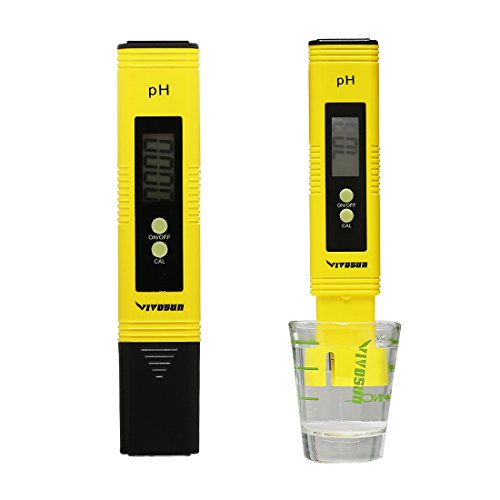
Step-by-step: getting a reliable measurement
- Inspect the probe. Check for damage, dried-out deposits and a depleted battery. Never touch or scrape the delicate glass sensing surface.
- Check calibration first. Use fresh buffer solutions according to the meter manual. A two-point calibration with buffers spanning your expected sample range is more meaningful than a single-point adjustment.
- Rinse between liquids. Gently rinse the probe with distilled or deionized water; do not rub the sensing bulb with a towel.
- Measure a representative sample. Immerse the electrode to the depth specified by the manufacturer, avoid contact with the container and allow the reading to stabilize before recording it.
- Check for drift. If the result fluctuates or seems implausible, repeat with a fresh sample and verify the meter against a known buffer.
- Clean and store correctly. Rinse after use and store the probe with the specified solution and cap. Follow the model’s instructions for extended storage.
The University of Toronto Growth Facilities provides a practical example of calibration with multiple buffer solutions and safe electrode handling. The US Environmental Protection Agency’s laboratory procedure explains how calibration checks and instrument maintenance support reliable readings.
Understanding calibration, accuracy and resolution
Resolution describes the smallest increment shown on the screen—for example, 0.01 pH. Accuracy describes how closely a reading corresponds to a valid reference and may be much worse than the displayed resolution. Repeatability describes how consistently the meter returns a value under similar conditions.
A meter that displays two decimal places is not automatically more trustworthy than one that displays one. Calibration quality, electrode condition, temperature and the manufacturer’s stated tolerance all matter. When comparing specifications, look for a clear accuracy statement rather than a headline saying “high precision.”
Common pH-pen problems and what they mean
The reading drifts or takes too long to settle
Possible causes include an aged electrode, contamination, a dried sensor, temperature differences, or outdated buffers. Start by checking the manual, confirming that calibration standards are fresh and cleaning the probe using the manufacturer’s approved method. Persistent drift may indicate a sensor that needs professional servicing or replacement.
The meter calibrates at pH 7 but seems wrong elsewhere
One reference point checks an offset, not the full response across a range. Verify against a second appropriate buffer. If calibration fails repeatedly, don’t assume the sample is at fault.
The probe was stored dry or in distilled water
Many glass-electrode systems deteriorate when left dry or stored long term in distilled water. The correct recovery steps vary by model, so consult the manufacturer’s rehydration instructions instead of improvising a treatment.
Two meters give different numbers
First check that both are recently calibrated with suitable buffers, are reading samples at similar temperatures and are operating within their specified tolerances. A different displayed resolution does not by itself establish which instrument is right.
Comparing pH pens and accessories
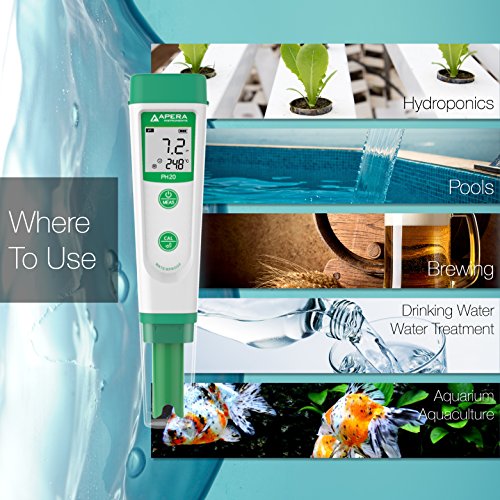
The existing AzlinkPRO comparison below remains available as a reference to several products. Because model revisions, included buffer sachets, electrode designs and listing availability change, confirm the exact contents and warranty directly with the current seller. Product appearances are not a substitute for calibration documentation.
Compare the key features, then see current product details and pricing on Amazon.



As an Amazon Associate, we may earn a small commission from qualifying purchases.
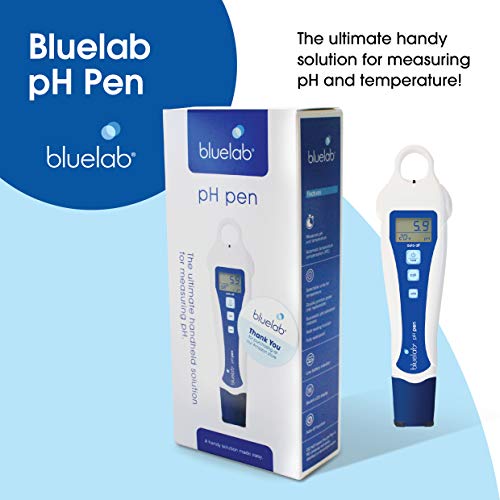
What to check before choosing a pH pen
- Replaceable or serviceable electrode: an advantage for instruments meant to be kept for years.
- Supported calibration points and buffer recognition: important for repeating checks consistently.
- Clear accuracy tolerance: more useful than resolution alone.
- Suitable protection rating: “water resistant” and “waterproof” are different claims.
- Availability of storage solution and documentation: especially important for older units.
- Intended use: a pen designed for liquids may not be suitable for direct insertion into compacted or dry materials.
Frequently asked questions
Can a pH pen measure dry soil directly?
Not every model can. Many pocket pH pens are intended for liquid samples only. Soil analysis may require an established soil-and-water method, a special soil electrode, or a laboratory test. Follow the instructions for the exact instrument.
Should a pH pen be stored in distilled water?
For most conventional glass pH electrodes, no. Distilled water may be appropriate for a brief rinse but can damage an electrode’s performance when used as long-term storage. Use the storage solution specified for the model. The US Environmental Protection Agency’s laboratory procedure likewise distinguishes rinsing from storage.
How often should a pH pen be calibrated?
There is no one interval for every user or device. Higher-stakes measurements, frequent use, electrode maintenance, an unexpected reading or a long storage period are all reasons to verify calibration. Follow the manufacturer’s specified schedule and check against known buffers when accuracy matters.
Does automatic temperature compensation replace calibration?
No. Temperature compensation and calibration solve different problems. ATC cannot correct a dirty, damaged or poorly calibrated sensor.
Final assessment
For general pH measurements, the best instrument is the one you can calibrate, clean and store correctly. Before considering extra display features, confirm the electrode type, accuracy tolerance, calibration process and availability of maintenance supplies.
Related reading: our light-meter measurement guide explains a different type of environmental instrument, including the difference between lux and PAR. Both topics reward attention to calibration and measurement units.
Editorial note (October 2026): This article was revised as a general technical guide using university and regulatory references. The instruments pictured are examples from the original article; no first-hand performance tests or current price claims are asserted.